Origins of an Icon
The banker's lamp, originally patented in the early 20th century, was created to address a very specific problem: eye strain among financial clerks, accountants, and bank tellers. In an era when early incandescent lighting was harsh, glaring, and prone to causing headaches during long shifts of ledger reading, workers needed a solution that would illuminate their paperwork without blinding them.
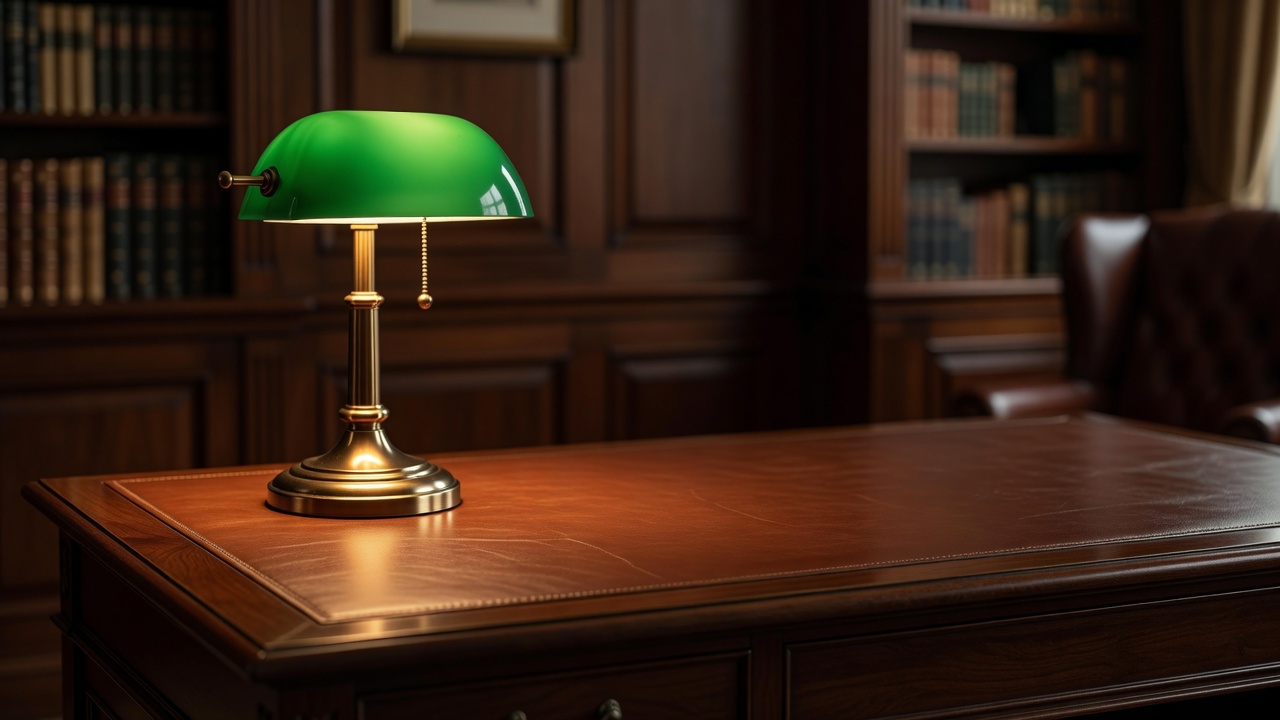
The solution was a beautifully crafted desk light featuring a thick, rounded glass shade. The shade was designed with a white opal glass interior to reflect bright, focused light downward onto the desk surface, and an emerald green glass exterior. The green color was not chosen merely for aesthetics; at the time, green light was widely believed to be psychologically soothing and less fatiguing on the human eye. Thus, the banker's lamp became a staple of financial institutions across the globe.
Anatomy of the Design
A true traditional banker's lamp is defined by several non-negotiable design elements that separate it from generic desk lighting:
- The Cased Glass Shade: Authentic shades are made of cased glass—two distinct layers of glass blown together. The inner layer is white to maximize light reflection, while the outer layer provides the iconic green tint. The glass is deliberately thick to diffuse the light passing through it, creating a soft, ambient room glow while maintaining strong task lighting below.
- The Brass Pedestal: The base and stand are traditionally constructed from solid brass, heavily weighted to ensure the lamp does not tip when the pull-chain is operated. Over time, this brass develops a unique patina, though many modern reproductions use brass-plated steel or polished finishes to maintain a bright, golden appearance.
- The Pull Chain: Instead of an inline cord switch or a push-button on the base, classic models feature a beaded brass pull-chain mechanism dropping directly from the bulb socket. The tactile satisfaction of pulling the chain to turn the lamp on and off remains one of its most charming features.
Bringing the Classic to the Modern Workspace
While the aesthetic of the banker's lamp is distinctly vintage, it remains incredibly popular in modern home offices, libraries, and legal workspaces. Its design provides an immediate sense of gravitas, tradition, and intellectual focus.
However, running a traditional incandescent bulb inside the thick glass shade can cause the fixture to become dangerously hot. For modern users, pairing a banker's lamp with a warm-toned LED retrofit bulb (around 2700K) is highly recommended. The LED bulb will draw a fraction of the power, eliminate the risk of overheating the glass, and perfectly replicate the cozy, golden glow of the original early 20th-century design.
Ambient vs. Task Lighting
It is important to understand how a banker's lamp functions within a lighting scheme. Because the shade is fixed on a horizontal axis (though it can usually be tilted slightly up or down), it does not offer the precise directional flexibility of an architect lamp. Instead, it provides excellent, broad task lighting for a centralized reading area, while simultaneously contributing to the ambient lighting of the entire room through the glowing green glass.
Is a Banker's Lamp Right for You?
Why You'll Love It
- Timeless, classic aesthetic that elevates the look of a traditional desk.
- Provides both focused downward task lighting and soft room ambiance.
- Heavy, durable construction designed to last for generations.
- Satisfying mechanical pull-chain operation.
Things to Consider
- Limited adjustability compared to modern articulated lamps.
- Glass shades are fragile and can be difficult to replace if broken.
- Takes up a notable amount of surface area on smaller desks.