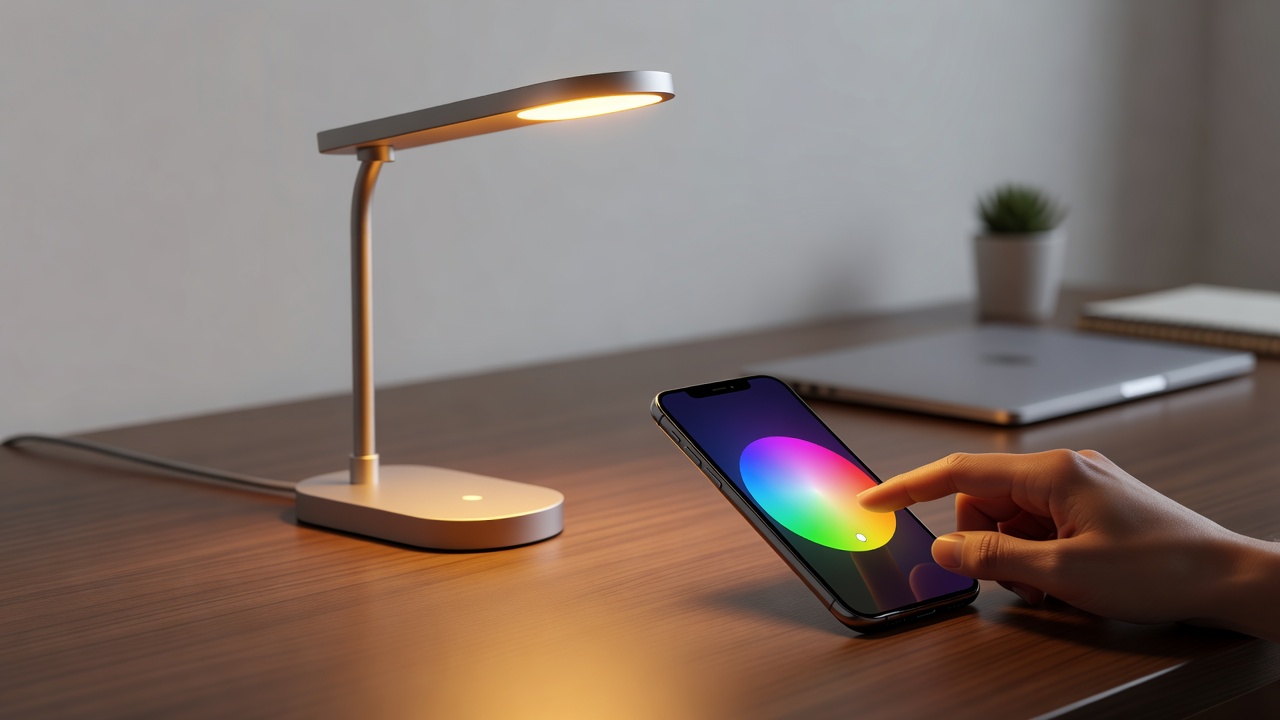
Beyond the Physical Switch
For most of history, interacting with a desk lamp was a binary experience: you turned it on, and you turned it off. Smart desk lamps break this limitation by embedding 2.4GHz Wi-Fi or Bluetooth radios into the lamp base. This connectivity allows the lamp to communicate directly with your smartphone, tablet, or smart home ecosystem.
The immediate benefit is remote control. You can turn your desk lamp on before you even enter the room, or ensure it is turned off after you have left for the commute. But the true power of smart lighting lies not in replacing the physical switch, but in enabling complex automations and dynamic lighting environments.
Circadian Lighting and Wellness
Our bodies rely on the shifting color temperature of the sun to regulate our circadian rhythms—the internal 24-hour clock that dictates our sleep-wake cycle. Staring into a cool, blue-tinted light late at night suppresses melatonin production, making it difficult to fall asleep.
Smart desk lamps address this through adaptive or circadian lighting routines. Using the companion app, you can program the lamp to mimic natural daylight patterns. At 9:00 AM, the lamp might output a crisp, stimulating 5000K daylight white. As the afternoon progresses, it slowly and imperceptibly shifts to a neutral 4000K. By 8:00 PM, it transitions into a deep, warm 2700K glow. This automated shift helps maintain productivity during the day while protecting your sleep hygiene at night.
Voice Control and Ecosystem Integration
Most smart desk lamps boast integration with major voice assistants like Amazon Alexa, Google Assistant, or Apple HomeKit. This hands-free control is surprisingly practical in a busy workspace. Saying, "Dim the desk light to 50%" while both hands are occupied typing or drawing streamlines your workflow.
Furthermore, ecosystem integration allows your lamp to participate in larger scene automations. A "Focus Mode" routine could simultaneously mute your phone notifications, start a lo-fi playlist, and snap your desk lamp to maximum brightness—all triggered by a single voice command or NFC tag tap.
RGB vs. Tunable White
When selecting a smart desk lamp, you will encounter two primary LED configurations:
- Tunable White: These lamps focus purely on variations of white light (ranging from very warm to very cool). They are generally more affordable and output higher quality white light, making them the pragmatic choice for strict productivity and reading.
- RGB+W (Color Changing): These lamps include red, green, and blue diodes, allowing them to produce millions of colors. While a neon pink or deep purple light isn't ideal for reading documents, it is fantastic for ambient backlighting, PC gaming setups, or creating a specific mood in a home studio.
Privacy and Connectivity Considerations
It is important to remember that a Wi-Fi connected lamp is an IoT (Internet of Things) device. It requires connecting to your home network and usually mandates creating an account with the manufacturer's cloud service. Users concerned about digital privacy should research the manufacturer's data policies or seek out lamps that support local control protocols (like Zigbee, Thread, or Matter) that do not rely on external cloud servers to function.
Pros and Cons
Pros
- Automated circadian rhythm lighting supports better sleep and focus.
- Voice control integration allows for seamless, hands-free adjustments.
- Customizable presets and scenes for different tasks (reading, computer work, crafting).
- Remote access via smartphone apps.
Cons
- Higher initial cost compared to standard LED lamps.
- Requires a stable Wi-Fi connection for advanced features.
- Potential privacy concerns associated with cloud-connected IoT devices.