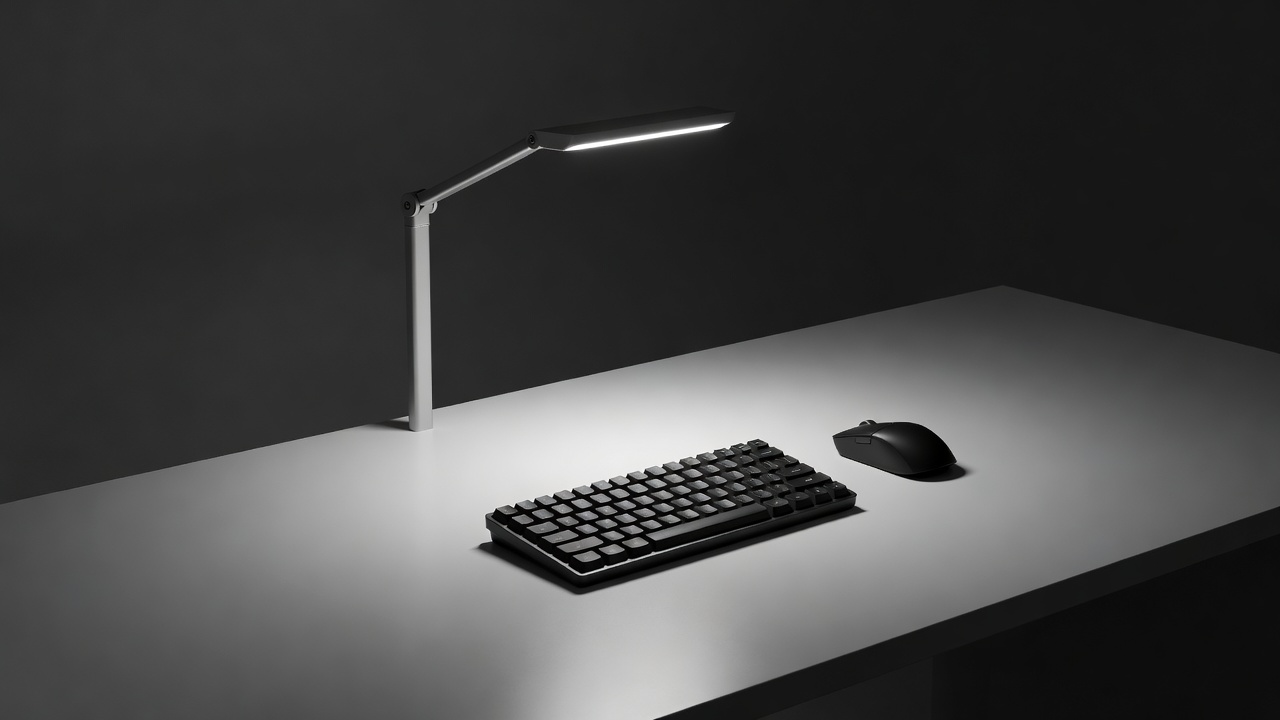
The Shift to Integrated LEDs
For decades, desk lamps were designed around the physical constraints of the lightbulb. The size, shape, and heat output of incandescent and halogen bulbs dictated that lamp heads had to be relatively large, well-ventilated, and strictly separated from the user's touch. The advent of the integrated LED changed this paradigm entirely.
Instead of a socket designed to receive a replaceable bulb, modern LED desk lamps feature arrays of tiny diodes built directly into the fixture. Because these diodes generate significantly less heat and take up a fraction of the space, designers have been liberated to create lamps with blade-like profiles, seamless curves, and radically minimalist aesthetics.
Understanding Color Temperature
One of the most significant advantages of modern LED technology is the control it offers over color temperature, measured in Kelvins (K). While older lighting technologies were generally stuck at a single color temperature, many contemporary LED desk lamps offer tunable white light.
- Warm White (2700K - 3000K): This yellowish, cozy light mimics the glow of traditional incandescent bulbs or candlelight. It is ideal for reading fiction, relaxing, or winding down in the evening, as it lacks the blue light frequencies that suppress melatonin production.
- Neutral/Cool White (3500K - 4500K): A balanced, crisp white light that is generally considered the sweet spot for general office work, typing, and standard computer usage.
- Daylight (5000K - 6500K): A stark, bluish-white light that replicates midday sunlight. This temperature is highly stimulating and excellent for tasks requiring extreme focus, color matching, or intricate detail work, though it can feel overly clinical for general use.
Color Rendering Index (CRI)
While color temperature dictates the tint of the light, the Color Rendering Index (CRI) measures how accurately that light reveals the true colors of objects beneath it. CRI is measured on a scale from 0 to 100.
Early LED lamps were notorious for low CRI scores (often in the 70s), which made colors look washed out, grayish, or artificially tinted. High-quality modern LED desk lamps boast CRI ratings of 90 or above. For graphic designers, illustrators, architects, or anyone working with physical media, a high-CRI lamp is not a luxury—it is an absolute necessity to ensure that the red you see on your desk is the same red that exists in daylight.
Dimming and Diffusers
Because LEDs are incredibly bright point sources of light, looking directly at a raw diode can be uncomfortable and cause severe glare. To mitigate this, LED desk lamps employ diffusers—frosted or textured panels that scatter the light evenly across the workspace, creating a soft, shadow-free pool of illumination.
Furthermore, virtually all modern LED lamps incorporate dimming capabilities. Unlike older incandescent dimmers that could cause buzzing or flickering, LED dimming is typically handled via Pulse Width Modulation (PWM) or constant current reduction, allowing for smooth, silent transitions from a faint glow to maximum brightness via capacitive touch sliders.
Longevity and Sustainability
The lifespan of an integrated LED desk lamp is one of its strongest selling points. A high-quality LED array is typically rated for up to 50,000 hours of continuous use. To put that into perspective, if you run the lamp for 8 hours every single day, the diodes will last for over 17 years before degrading significantly.
Combined with their low power consumption (often drawing between 5 and 12 watts to produce the equivalent light of a 60-watt incandescent bulb), LED lamps represent a highly sustainable, eco-friendly lighting choice that reduces both energy bills and electronic waste.
Are There Any Downsides?
Pros
- Extremely energy efficient (low wattage, high lumen output).
- Ultra-long lifespan (often 50,000+ hours).
- Customizable brightness and color temperatures.
- Sleek, modern designs unconstrained by traditional bulb shapes.
Cons
- Integrated LEDs mean the whole lamp must be replaced if the diodes fail.
- Lower quality models may exhibit high-frequency flicker that causes eye strain.
- Can lack the "heirloom" feel of traditional brass or steel mechanical lamps.